
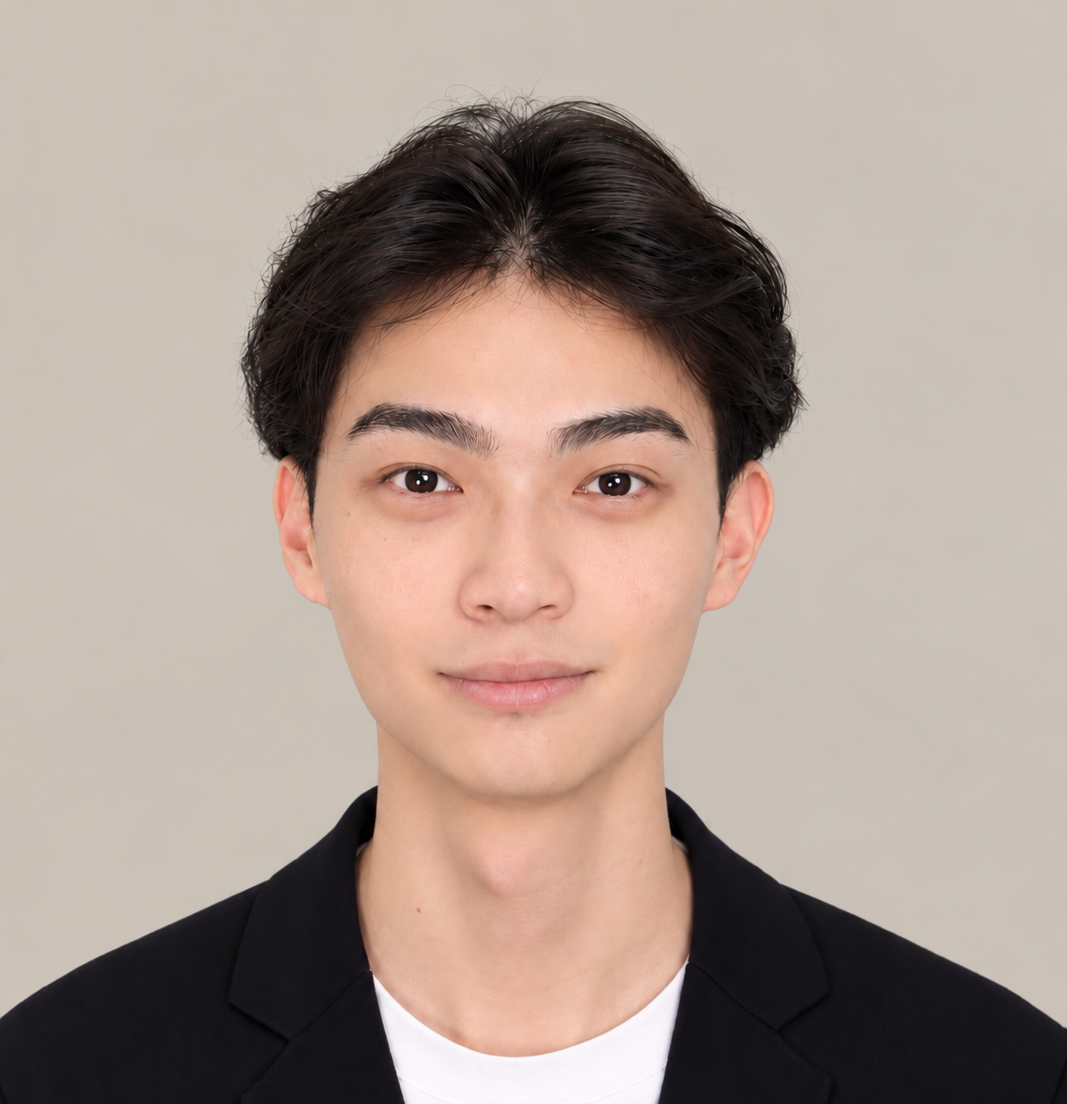
Bing-Syuan Wu obtained both his B.Sc. and M.Sc. degrees in Chemistry from Tunghai University, Taiwan. Throughout his academic training, he developed a strong background in synthetic organic chemistry and catalysis, combining theoretical knowledge with extensive research experience. He joined the research group of Prof. Cheng-Che Tsai during the second year of his undergraduate studies and continued his research there throughout his master's degree. During this period, his work focused on asymmetric catalysis and synthetic organic chemistry, including chiral auxiliaries, phase-transfer catalysis, and palladium-catalysed asymmetric allylic substitution, with particular emphasis on the stereocontrolled formation of C-N and C-O bonds.
Prior to joining the University of Strathclyde, he worked as a Research Assistant at the Institute of Chemistry, Academia Sinica, Taiwan, in the research group of Prof. Tiow-Gan Ong. His research focused on the synthesis and coordination chemistry of carbodicarbene- and N-heterocyclic olefin-based ligands, as well as their applications in transition-metal chemistry. This experience further strengthened his expertise in organometallic chemistry and molecular design while broadening his interest in developing innovative synthetic methodologies.
DC4 will develop a skeletal mutation methodology for N-insertion into -tetralones to generate azepin-1-ones, leveraging platforms for electron transfer (photocatalysis, anodic oxidation). First, the DC will explore a photocatalytic approach using TPA as the photoredoxcatalyst. Secondly, the DC will study an electro-photochemical approach in which TPA·+ will be generated and engaged as photooxidant in the decarboxylation/β-scission cascade of α-imino-oxyacids.
 The Electrify It project has received funding from the European Union’s Horizon Europe research and innovation programme under the Marie Skłodowska-Curie grant agreement No 101226468.